
Bula Bula Fiji
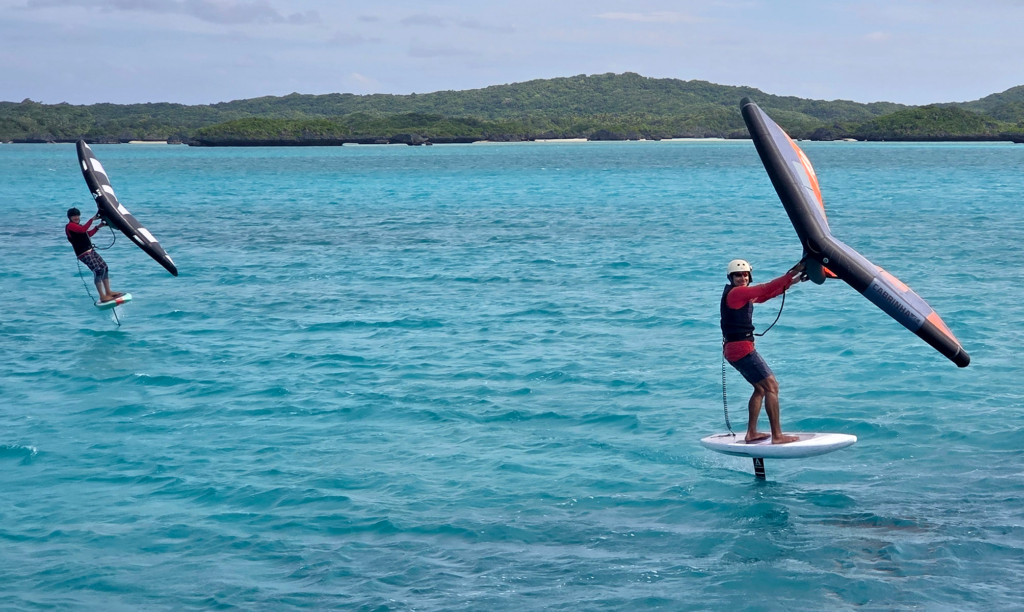
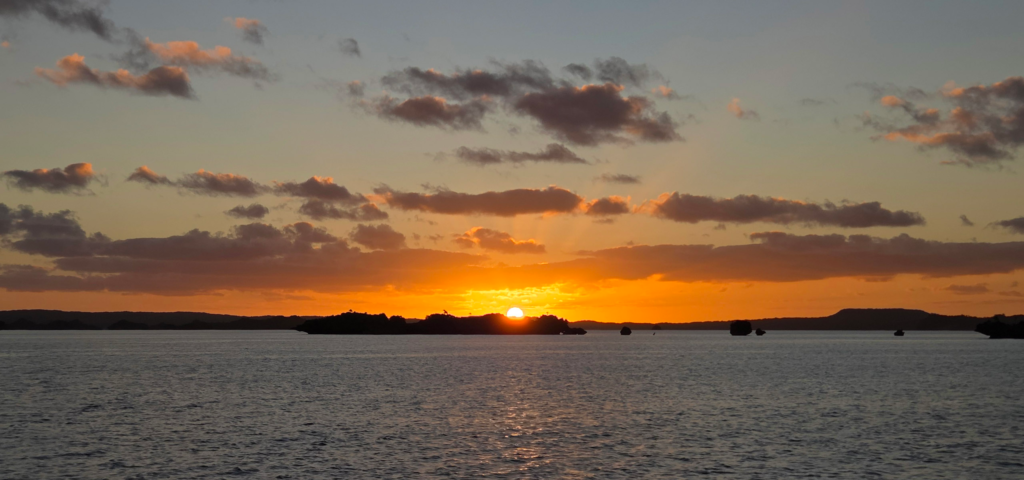
I dare say it’s been too long since I’ve written a blog post, but there’s no time like the present. I woke up early, dried up last night’s rain, and put up a pot of coffee. The wind is up for our favorite water sports, we’ve got sailing friends anchored on either side of us, and a view of paradise in any measure of the word (cue sunset).
Now, let’s rewind the story all the way back to May 1st, when our logbook reads, “06:52 Land ho! Suvasuva, Fiji. 07:49 Gerty’s approach on Channel 16. Close to Nakama Creek. 08:10 Tied to customs dock, waiting for officials.”
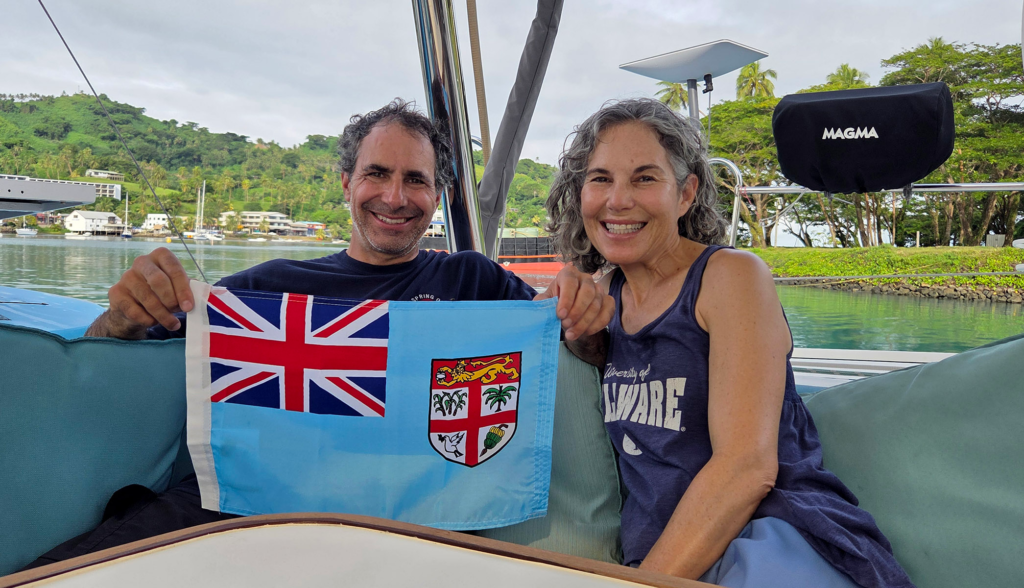
I remember us feeling smug as Gerty skidded into home base at Nawi Marina. The sail from Minerva to Savusavu was fast (averaging over 9 knots SOG), and we were going to reap the benefits of arriving early in the season at a place touted as one of the world’s best cruising destinations. That is, if the final leg of our journey was possible. That’s right, we still weren’t exactly there.
We needed a cruising permit, Fijian dollars, food, a Sym card, twelve Kavas to go, sevusevu bula outfits, and a lucky weather forecast that would allow us to sail south-southeast, against the trades, to the remote Lau Group.
Eleven visits to the village, including six or seven in the warm torrential rain, did the trick. On May 6th, we had our stuff and an extraordinary 18 knots TWS from due south. What’s more, we had buddy boats for the first time.
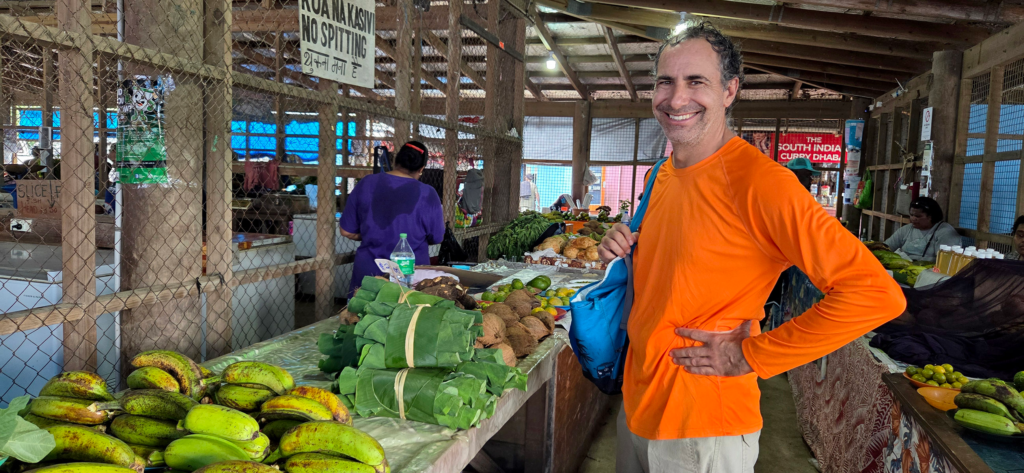
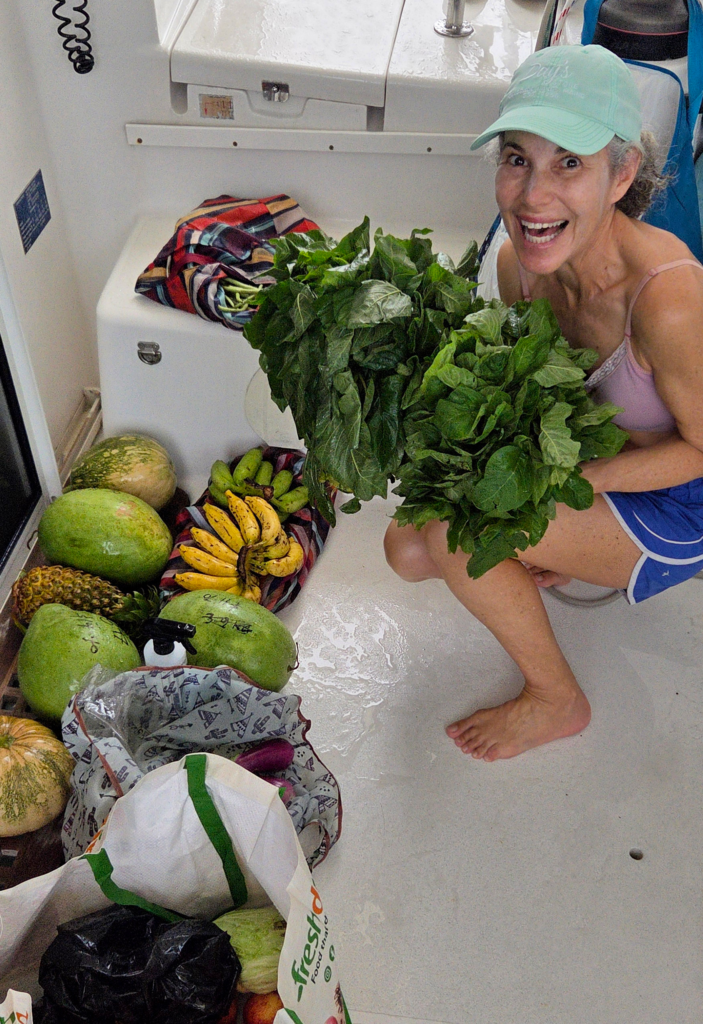
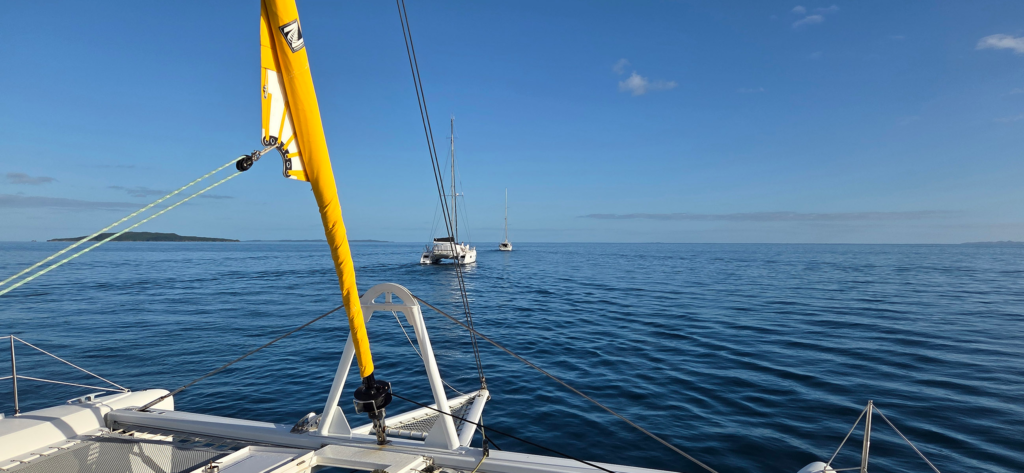
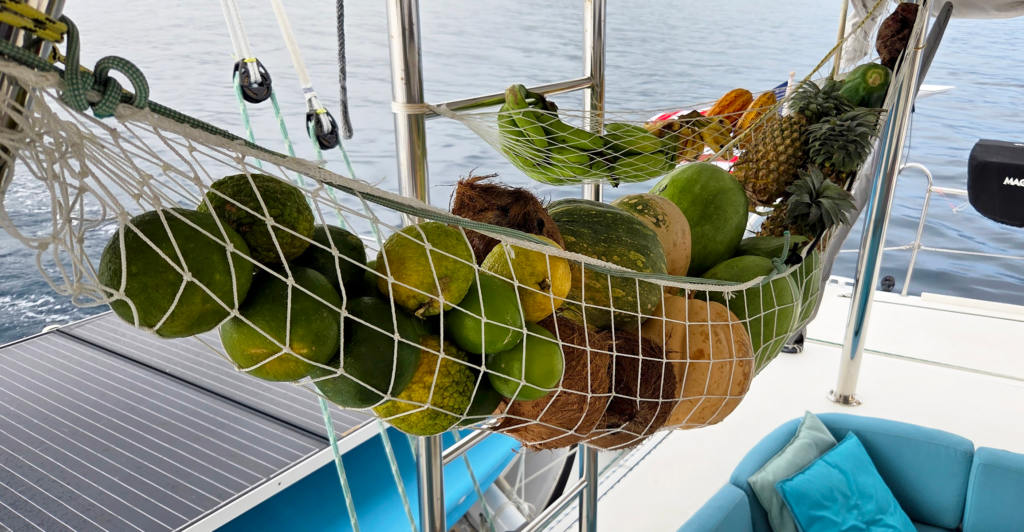
As the saying goes, if there’s another boat, it’s a race. So, with Meitaki in the lead (head start), Gerty in second, and Blue Pearl hauling up the rear, we set off. We had a great time jockeying for positions, tacking and teasing each other about who was cheating (motoring upwind to push a tighter angle) for the next thirty-four hours. Then, finally, with 4 pineapples, 3 watermelons, 2 pumpkins, and 1 bunch of bananas mostly unscathed in Gerty’s swinging basket, we made it.
Before our dinghies even touched the shore, the locals welcomed us to Vulaga. “Bula, bula!” three young men called from the beach, waving warmly as we instinctively waved back. The moment our feet hit the sand, they sliced open freshly picked, green-skinned oranges and handed them to us. Mouths watering from the sweet citrus, we were pointed toward the village.
We walked up and over the ridge, descending to where Suki, the headman, was waiting. He was to lead us to the chief for our sevusevu ceremony. I watched Michael and our friends do a quick mental inventory: Kava? Check. Covered shoulders and legs? Check. Hats off? Check. One hundred Fijian dollars? Check. We nodded to Suki, signaling we were ready. Let’s go.
The Chief sat waiting, dressed in a traditional sulu skirt paired with a bright Brazil national football team jersey. His bare feet looked as if they had walked a lifetime, and when he welcomed us, his voice was a gentle, seasoned wheeze.
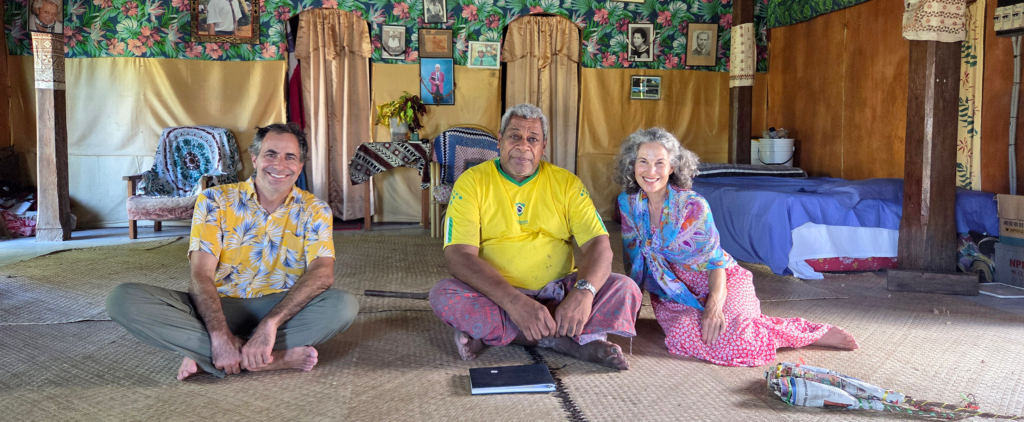
Suki translated the chief’s words, explaining that by performing sevusevu, we were being woven into the fabric of the village—granted a deep connection to its people, its land, and its surrounding seas. From this moment on, we were privileged to share in everything they had, bound by a mutual promise of respect and care. To make us feel truly at home, we were assigned a host family: Lusi, Villiame, and twelve-year-old Salesi. With the formal ceremony concluded, we were taken on a tour to meet the village woodcarvers, artisans whose craft has been passed down through generations of Vulagans and is renowned across all of Fiji.
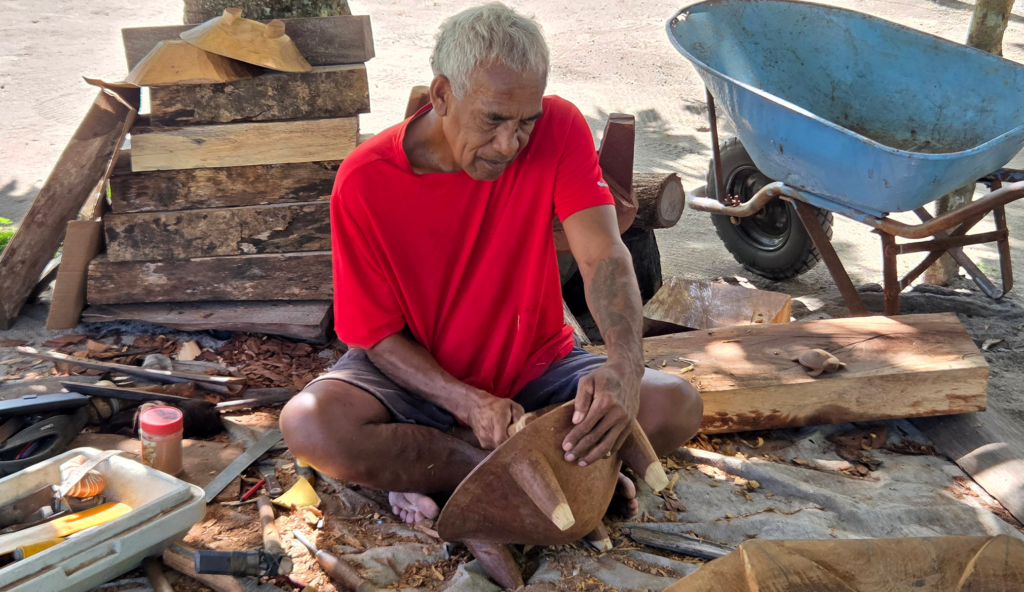
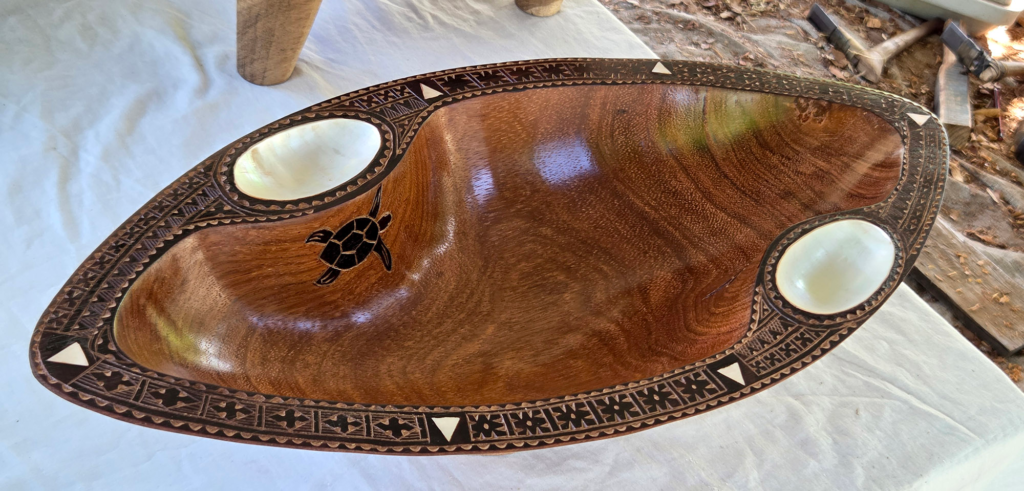
Sunday was church day. The sermon wasn’t exactly our style—a bit too much fire and brimstone for us soft Jews—but the experience is always worth it. I was struck by the world of difference between Vulaga’s rigid religious tone (stark white dresses, black sulus, and penance pews) and what we experienced in the Gambier Islands. To me, Polynesia was all about the flowers and the music; so far, Melanesian Fiji felt much more austere. But, of course, one preacher is just one preacher.
Luckily for us, Sunday is also a massive feast day in Vulaga, and we were invited to lunch at Lusi and Villiame’s. Sprawled out on a beautiful, handmade woven mat, we were treated to warm roti, fish prepared umpteen different ways, and fresh-out-of-the-coconut milk that was to die for.
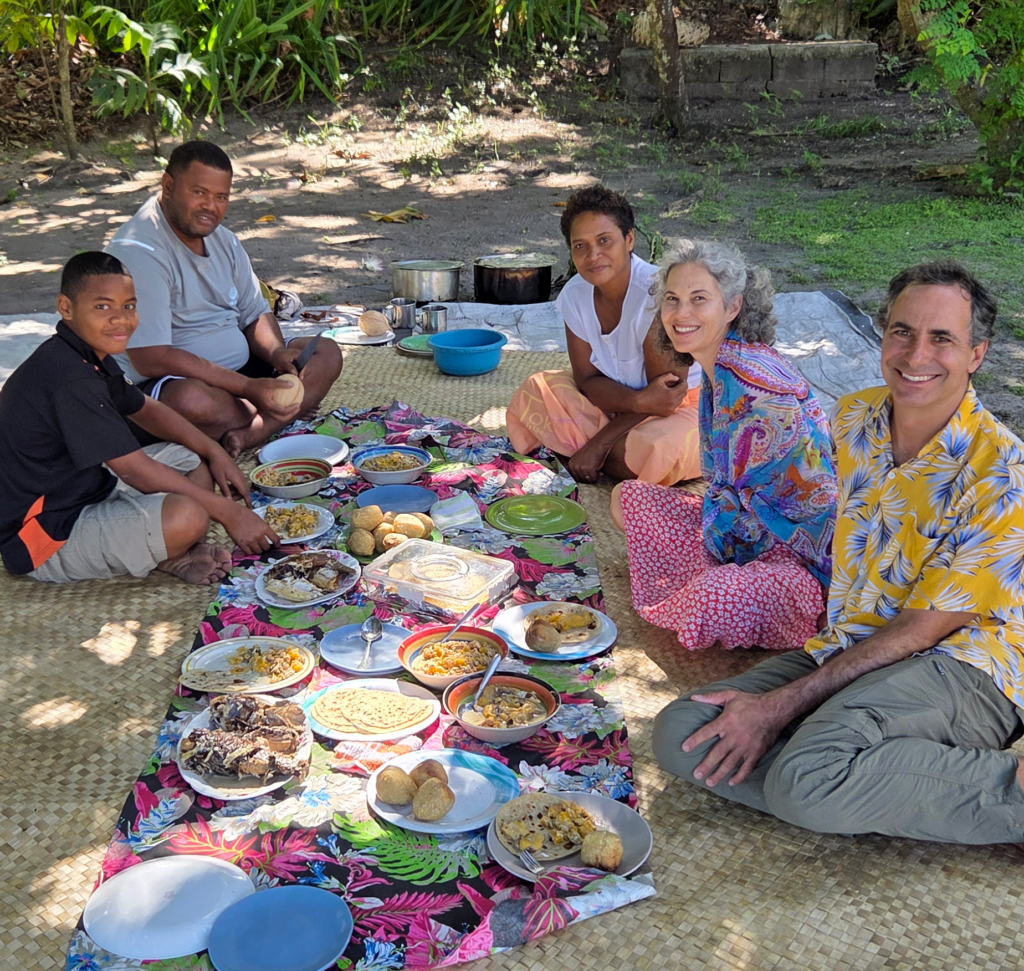
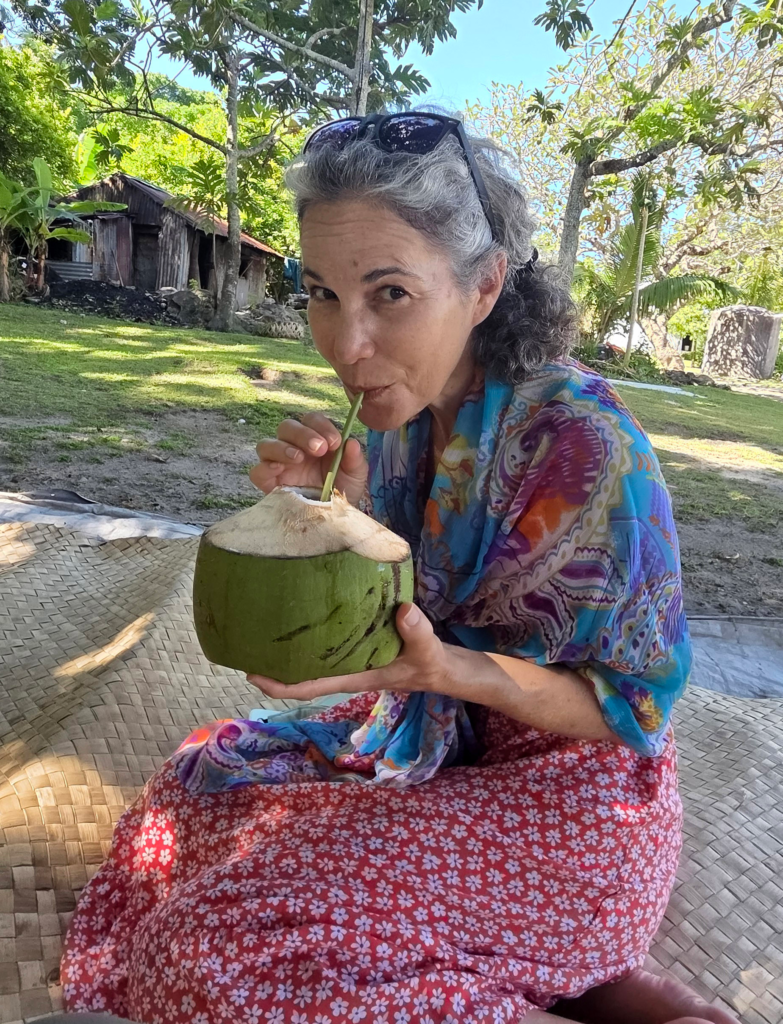
Villiame showed us how to poke a hole in the soft spot and slurp from a grass straw. Then, he sent us home with a hand-woven basket holding two more coconuts, husked and ready for drinking.
Funny that I just wrote, he sent us home. That implies that our new backyard is a dappling of volcanic outcrops seemingly blooming from ancient seeds planted in the rippling turquoise water. To say it’s difficult to capture in a photograph is an understatement, but our friend Clive came close when he drone shot Gerty coming in through the pass.
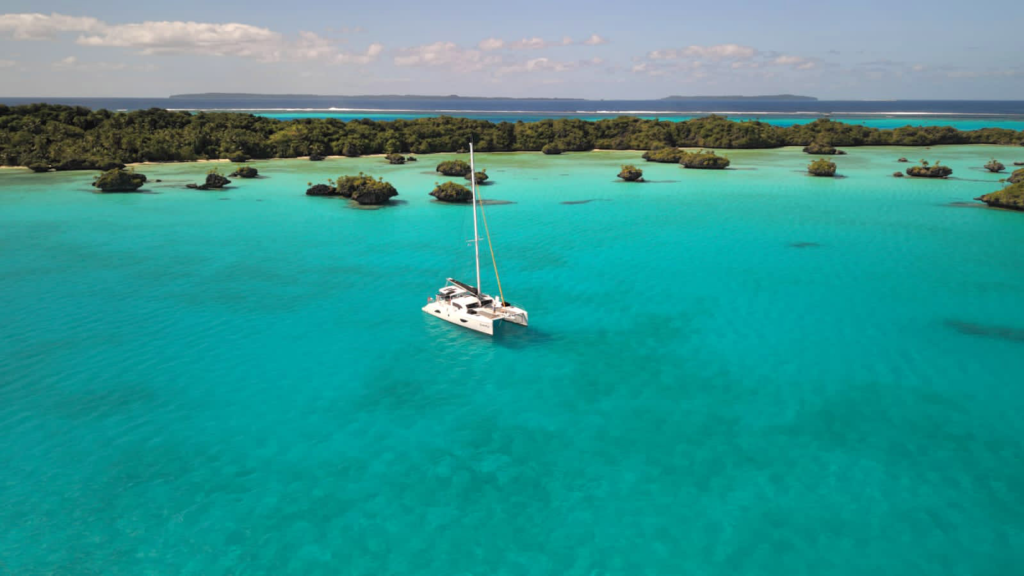
But here’s the thing—it’s not the endless natural sculptures twisting their way over land and water or even the happy solo palm trees that pop up to say hello from barren black rocks that’s enchanting here, so much as the undeniable absence of sharks.
Last remarks
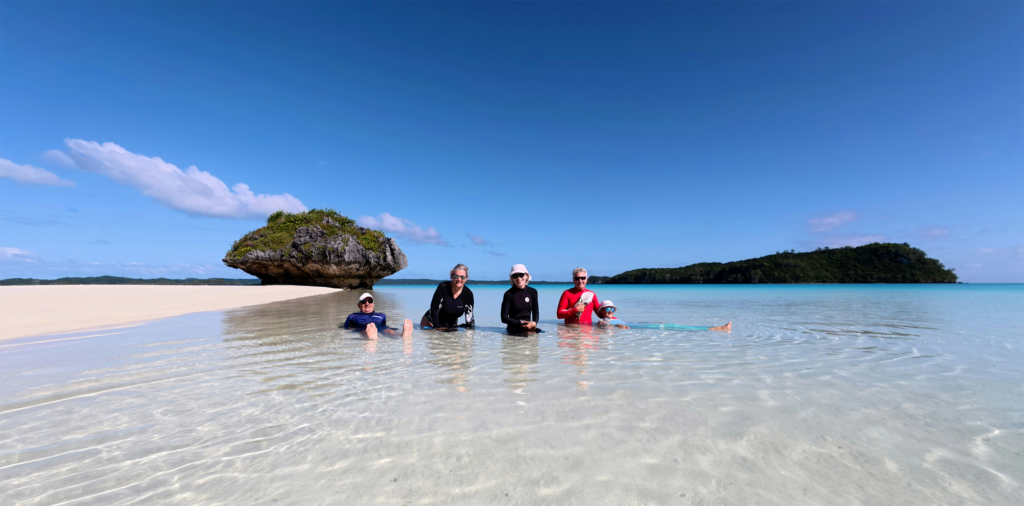
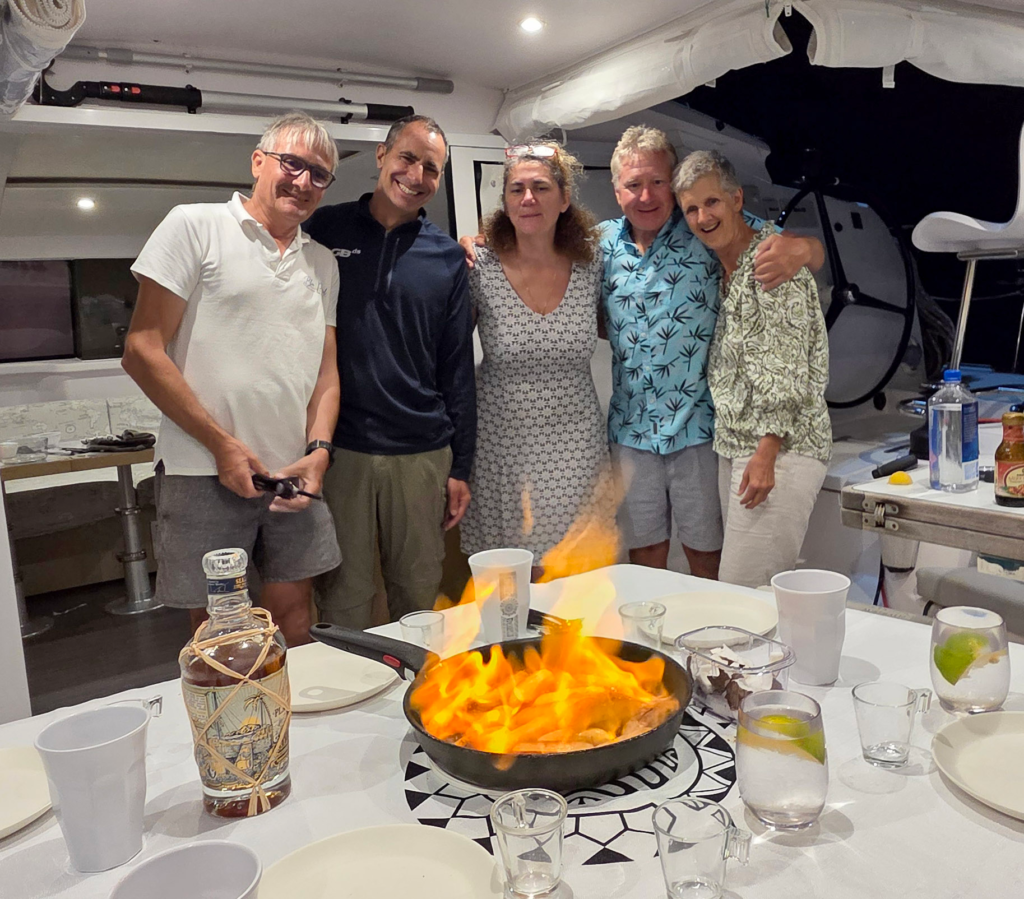
- Ooo la la, merci beaucoup à Claude. It is nothing short of divine to be friends with a generous French cook. Can you say, “Des bananes flambées au rhum et à la cassonade (Bananas Foster) et des crêpes fraîches (fresh crepes)?” And how about Antonia, growing vegetables in a jar—it’s a miracle! Claude, Marc, Antonia, and Clive, we have so enjoyed the stories, laughs, and water-sport chatter! (You know you’ve been foiling a lot when you’re wriggling into a wet wetsuit!) We will always hold this Vulagan adventure in our hearts. Thanks, guys, for everything!
This was one of my favorite blog posts. From the beautiful photos, to the breathtaking video and your eloquent words, you captured the wonder of this beautiful and remote place. Loved it.
great post & photos Jill. have a fun few months in the South Pacific and we will see you both in Maine.
Truly awesome. xo
Yay! thanks!
Gorgeous pictures and the videos are extraordinary. Happy to see you both so joyful. See you this summer. Sending love to both of you.
Thank you and great seeing you!
What a story,…having yo meeting the Chief and being “assigned a family”. Xx
Thanks. And so great to see you in Canada